From immigrant harbor to global skyline
As your boat traces New York Bay, you travel through centuries of migration, engineering, commerce, and city reinvention.
Table of Contents
From Dutch outpost to New York Harbor
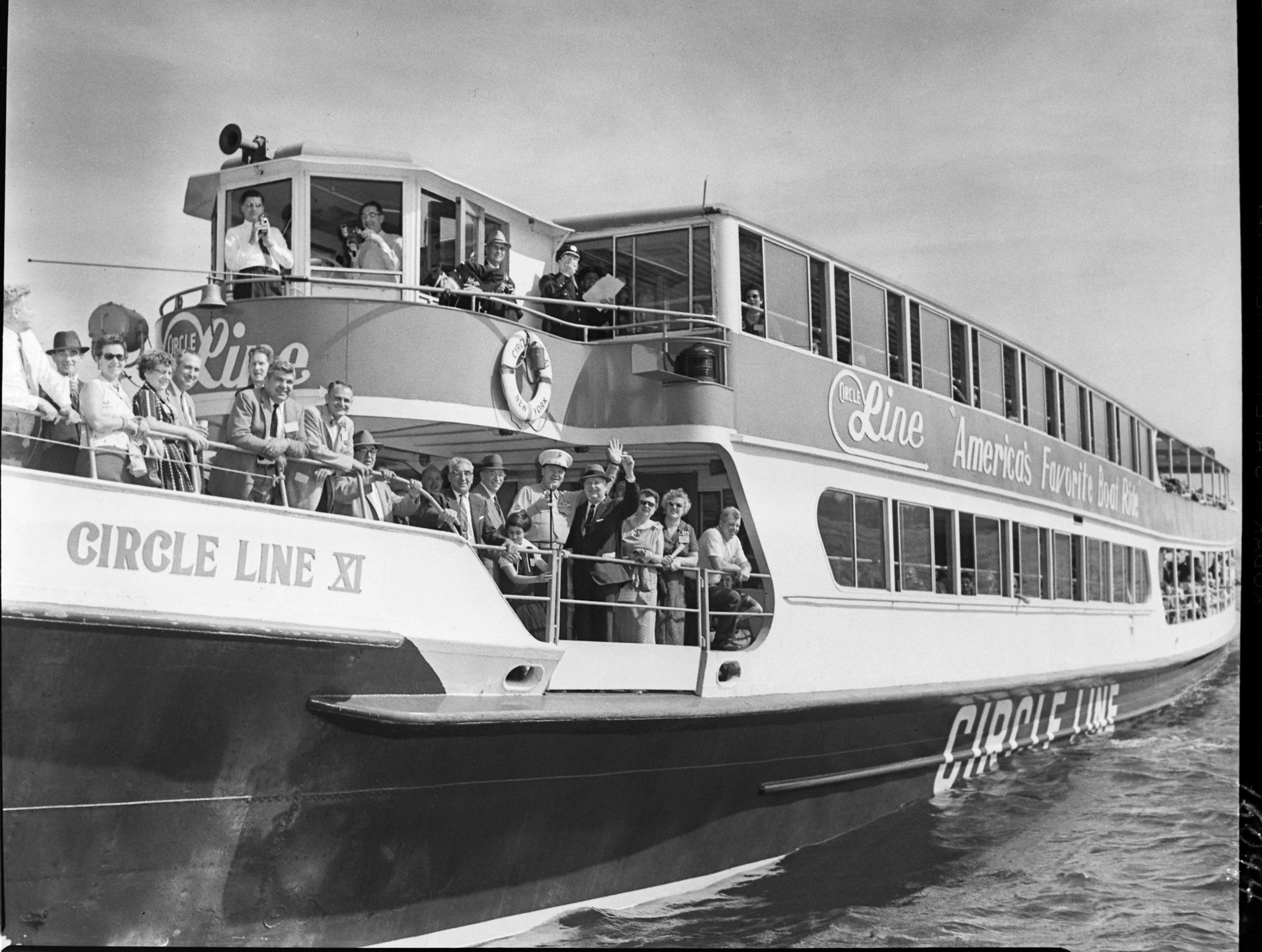
Long before cruise decks filled with cameras and skyline excitement, this harbor was a strategic estuary where Lenape communities fished, traded, and navigated tidal rhythms with deep ecological knowledge. In the early 17th century, Dutch settlers established New Amsterdam at the southern tip of Manhattan, recognizing what geography made obvious: this was a natural gateway to inland rivers, Atlantic routes, and commercial opportunity. Ships arrived with goods, ideas, and ambitions, and the small colonial outpost quickly took on an outsized role in Atlantic trade.
When English control transformed New Amsterdam into New York, the harbor continued to expand as the city’s economic heartbeat. Wharves multiplied, neighborhoods thickened, and maritime labor shaped everyday life from dawn to dusk. Through wars, industrial growth, and waves of immigration, these waters remained the city’s connective tissue. Today’s sightseeing cruises glide across the same channels once crowded with merchant brigs, steam ferries, and cargo vessels, reminding every passenger that New York’s global identity was forged first at the waterfront.
Lower Manhattan and the first waterfront
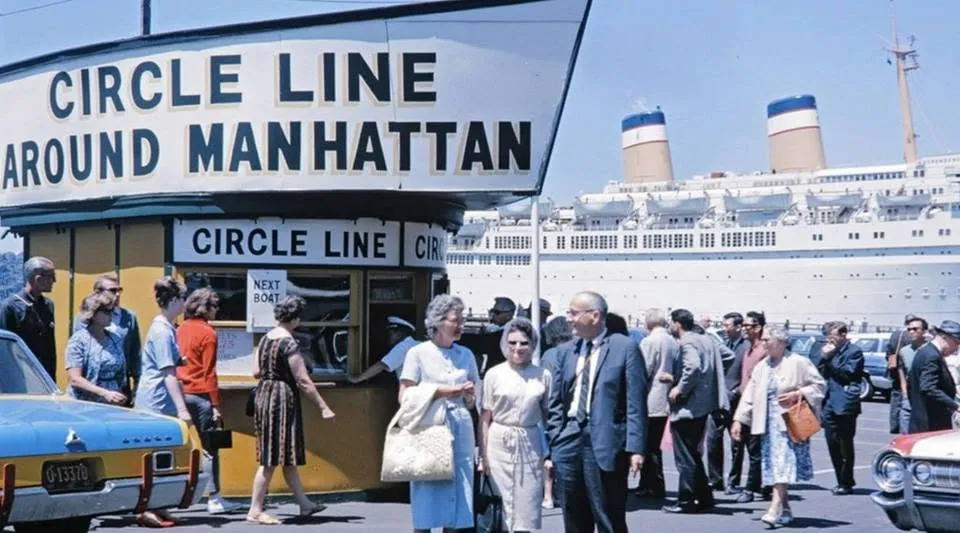
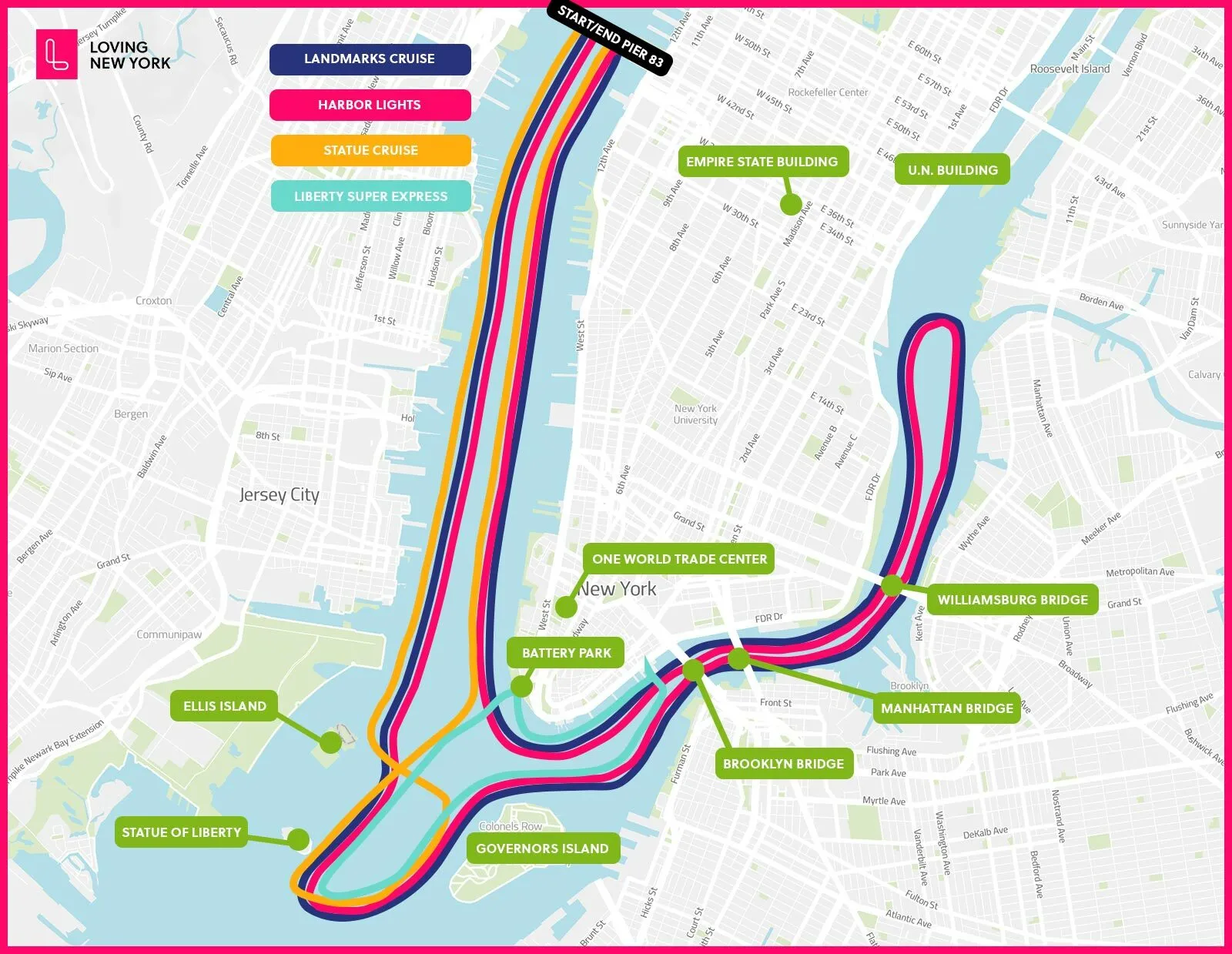
Lower Manhattan is where New York’s harbor story feels most immediate. From the water, you can trace layers of time in a single sweep: old shipping edges, modern ferry terminals, civic buildings, and towers that rose as commerce shifted from docks to finance. Battery Park and nearby waterfront spaces now feel open and welcoming, but for centuries this shoreline was a dense working zone where maritime schedules dictated the pace of urban life.
As your boat passes this edge of the island, it becomes easier to understand how deeply the city’s street plan and economy were shaped by port logistics. What looks serene from a sightseeing deck once roared with carts, cargo cranes, and multilingual dockside negotiations. Even now, the area carries a quiet sense of continuity: ferries come and go, commuters flow through terminals, and the harbor remains a living infrastructure rather than a static backdrop.
Immigration, Ellis Island, and new beginnings
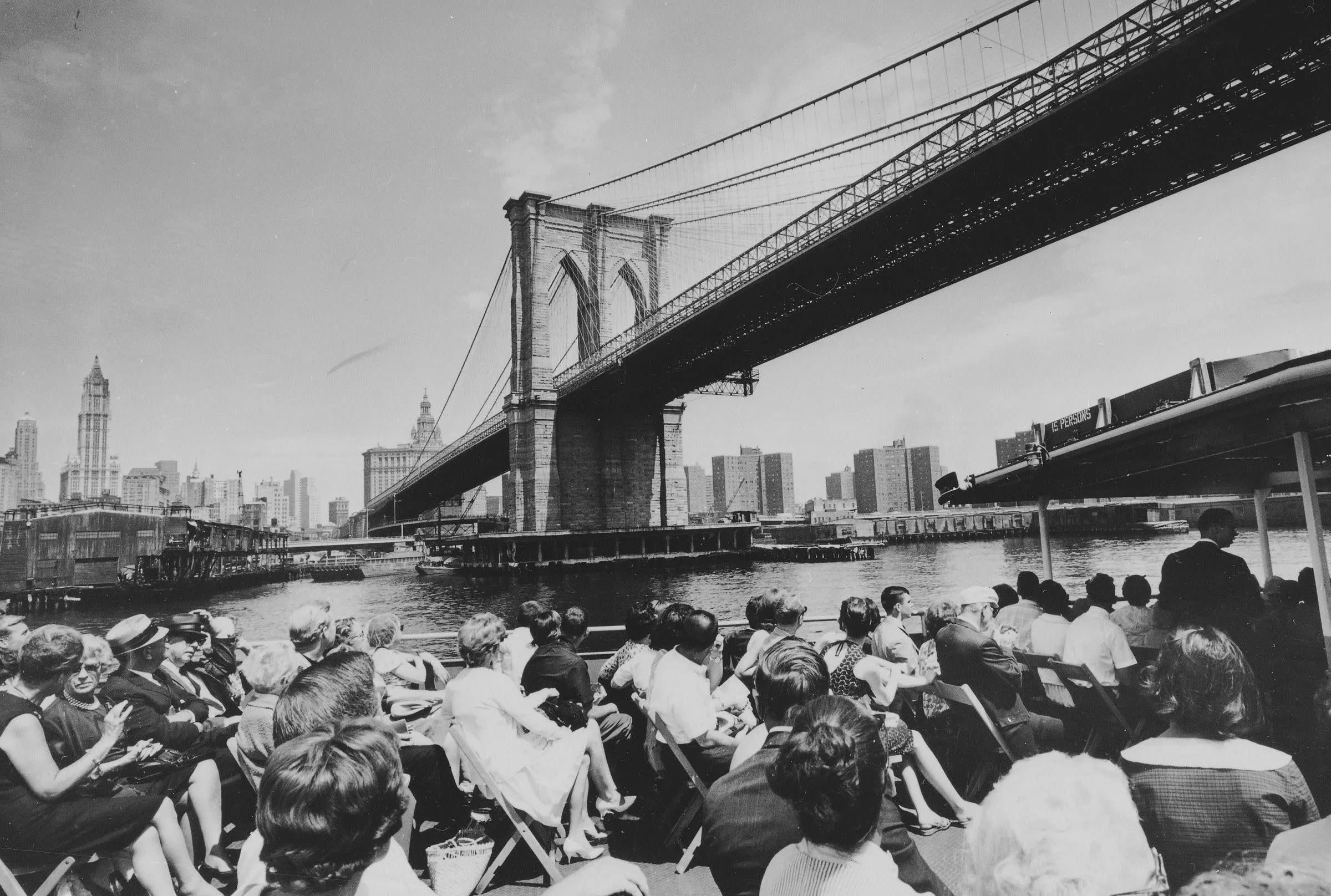
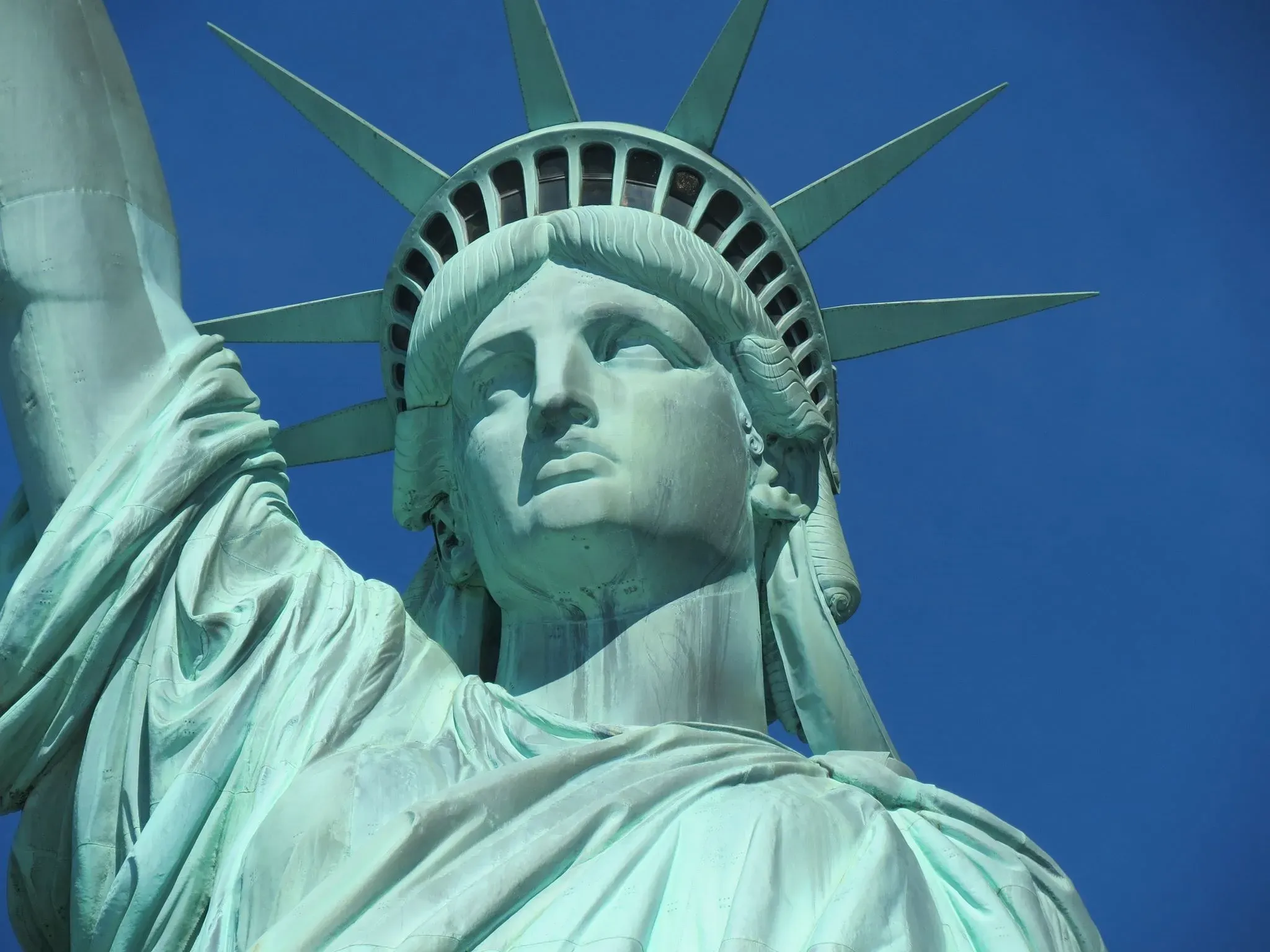
For millions of families, New York Harbor was not a postcard scene but a threshold. Between the late 19th and early 20th centuries, immigrant ships approached these waters carrying people who had crossed oceans with uncertain futures and extraordinary resolve. Ellis Island became the symbolic and administrative gateway for many of these arrivals, where medical checks, paperwork, waiting halls, and anxious hope shaped life-changing first days in America.
Cruising near Ellis Island today can be emotional, especially for visitors tracing family history. The skyline in the distance stands as a visual promise that once drew newcomers forward, while the island itself preserves the memory of courage, separation, reinvention, and resilience. From the deck, you are not just seeing architecture; you are witnessing one of the defining migration landscapes of the modern world.
Bridges that stitched the city together
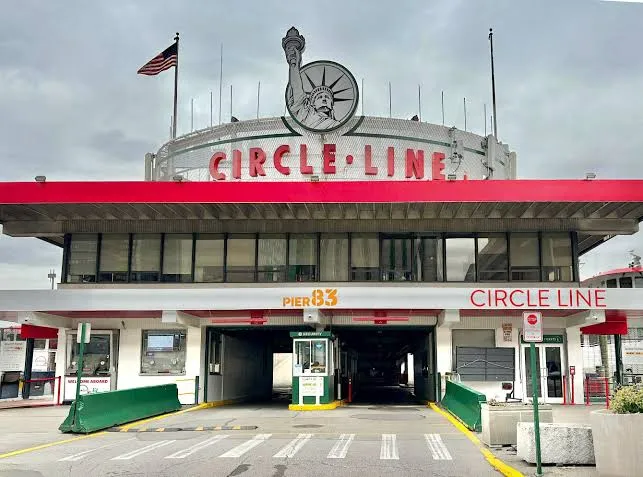
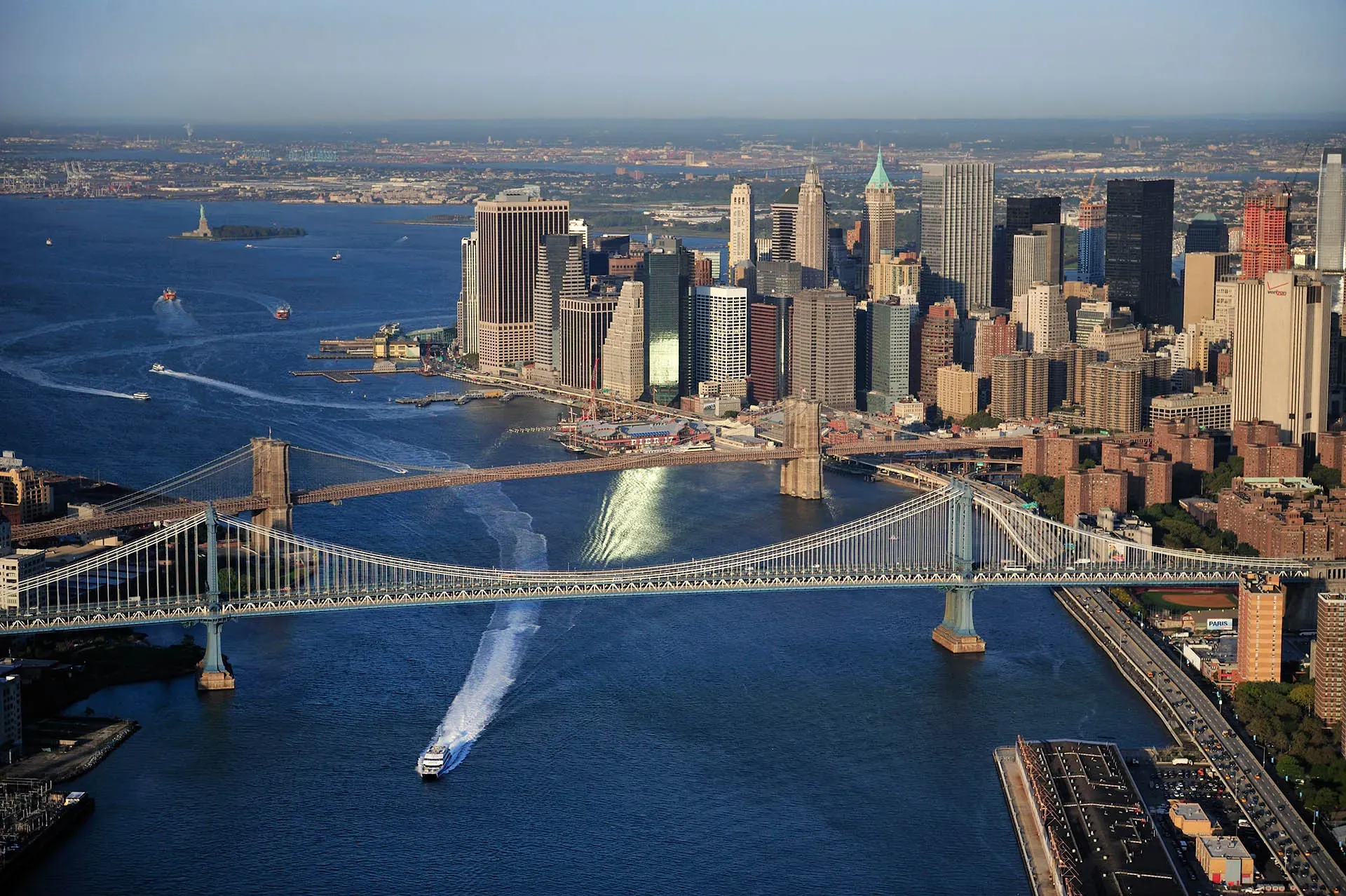
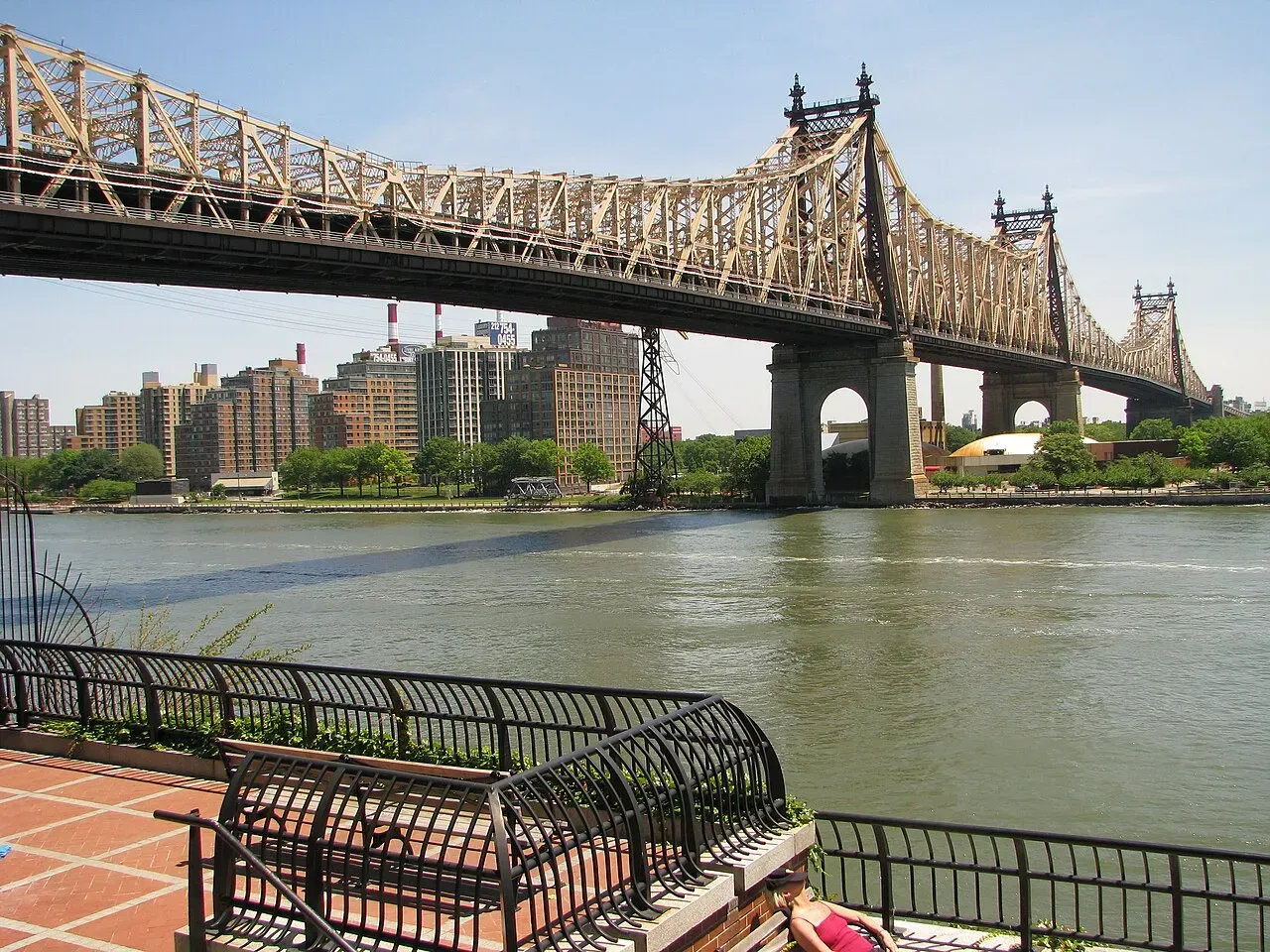
The great bridges of New York are engineering monuments, but they are also social connectors that transformed everyday life. When the Brooklyn Bridge opened in 1883, it dramatically reduced travel barriers between boroughs and accelerated patterns of work, housing, and commerce. Later bridges expanded those connections, integrating wider parts of the metropolitan region into a denser urban web.
From the water, bridge design details become easier to appreciate: stone towers, suspension geometry, traffic flow, and the sheer scale of infrastructure built to bind a growing city together. As your cruise passes beneath or alongside these structures, you glimpse the practical brilliance behind New York’s expansion and the visual poetry that made its bridges global icons.
Industry, shipping lanes, and working piers
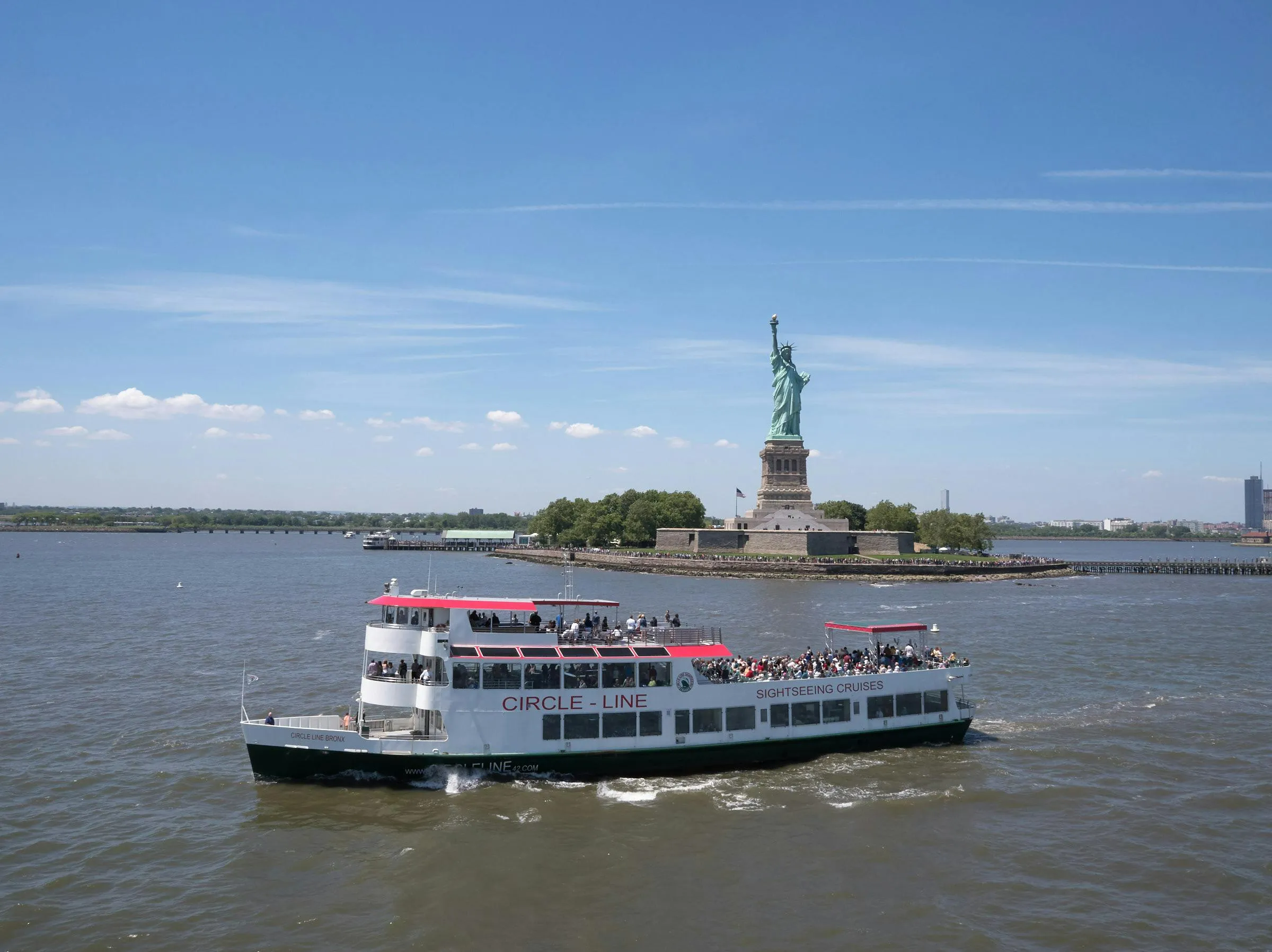
Beyond landmark views, New York Harbor has always been a labor landscape. Tugboats, barges, ferries, cargo terminals, and service vessels have long kept the metropolitan system moving. Even as container shipping shifted to larger regional facilities over time, maritime logistics, pilot navigation, and waterfront operations remained central to the region’s economic function.
On a sightseeing route, you may notice this working character in subtle ways: coordinated vessel movements, restricted channels, and port security patterns that shape navigation. These details remind visitors that the harbor is not only a scenic stage set; it is an active and highly managed environment where tourism coexists with transport, trade, maintenance, and emergency services.
Skyscrapers, finance, and the changing skyline
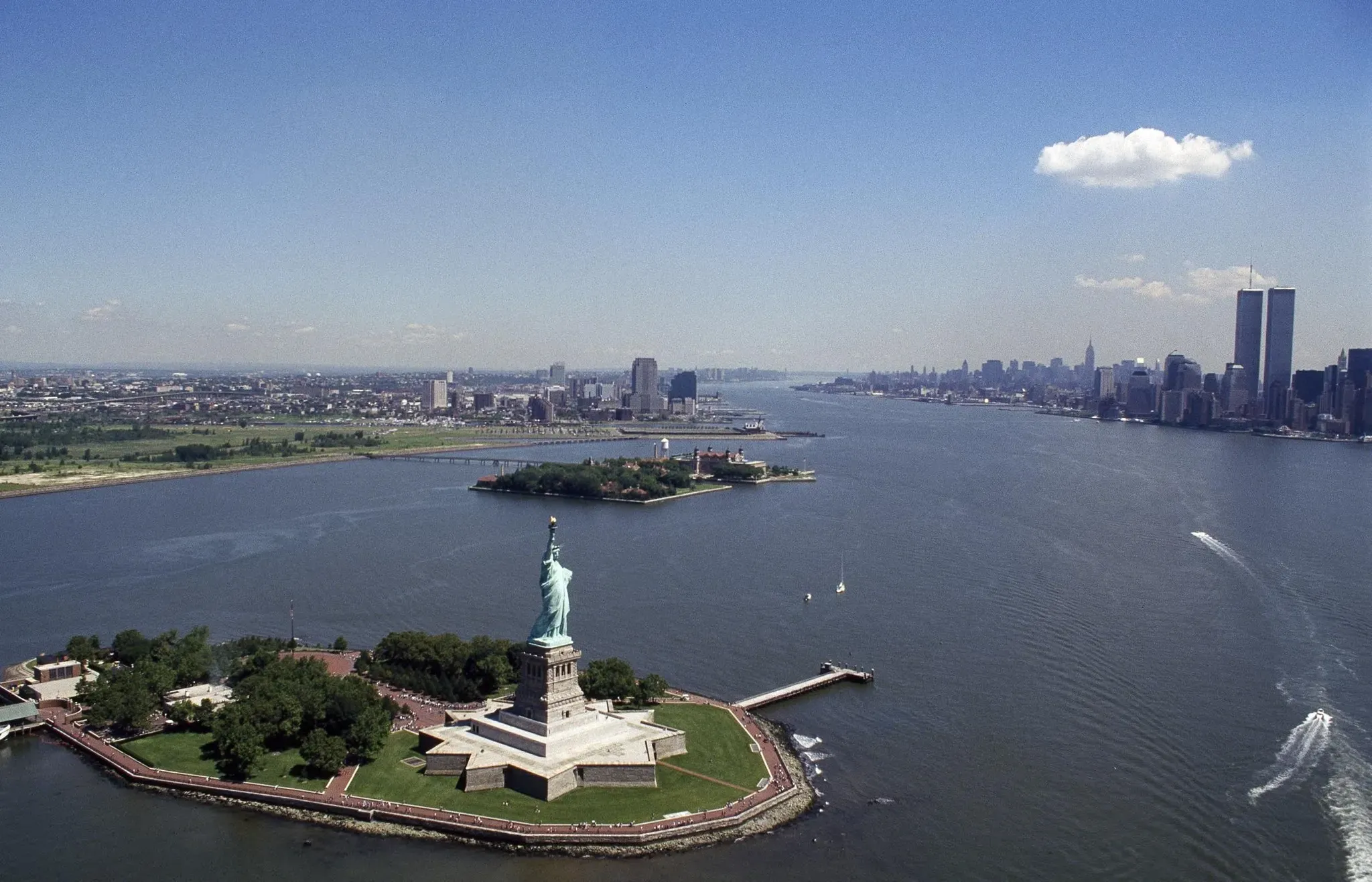
Few skylines have changed as visibly and as often as New York’s. From early steel-frame towers to Art Deco silhouettes and contemporary glass forms, the city’s vertical growth mirrored technological progress and economic ambition. The financial district in particular became a symbol of global markets, where architecture projected both confidence and competition.
Seen from the harbor, the skyline reads almost like a living timeline: historic profiles alongside bold new structures, each era leaving its own geometry. This perspective explains why so many visitors describe their cruise as the moment New York finally “clicks”—because from the water, the city’s scale, contrasts, and continuity become instantly legible.
Waterfront renewal in Manhattan and Brooklyn
In recent decades, large stretches of New York’s shoreline have been reimagined from industrial infrastructure into public parks, promenades, cultural venues, and mixed-use neighborhoods. Areas once dominated by heavy port functions now host cyclists, families, performance spaces, and skyline-facing lawns, all while retaining visual traces of maritime history.
A harbor cruise reveals this transformation in continuous sequence: preserved piers beside new developments, old warehouse districts near contemporary residential blocks, and community waterfronts that reconnect residents to the water. It is one of the clearest examples of how cities evolve—adapting land use while negotiating memory, access, resilience, and identity.
Crowds, safety, and cruise accessibility
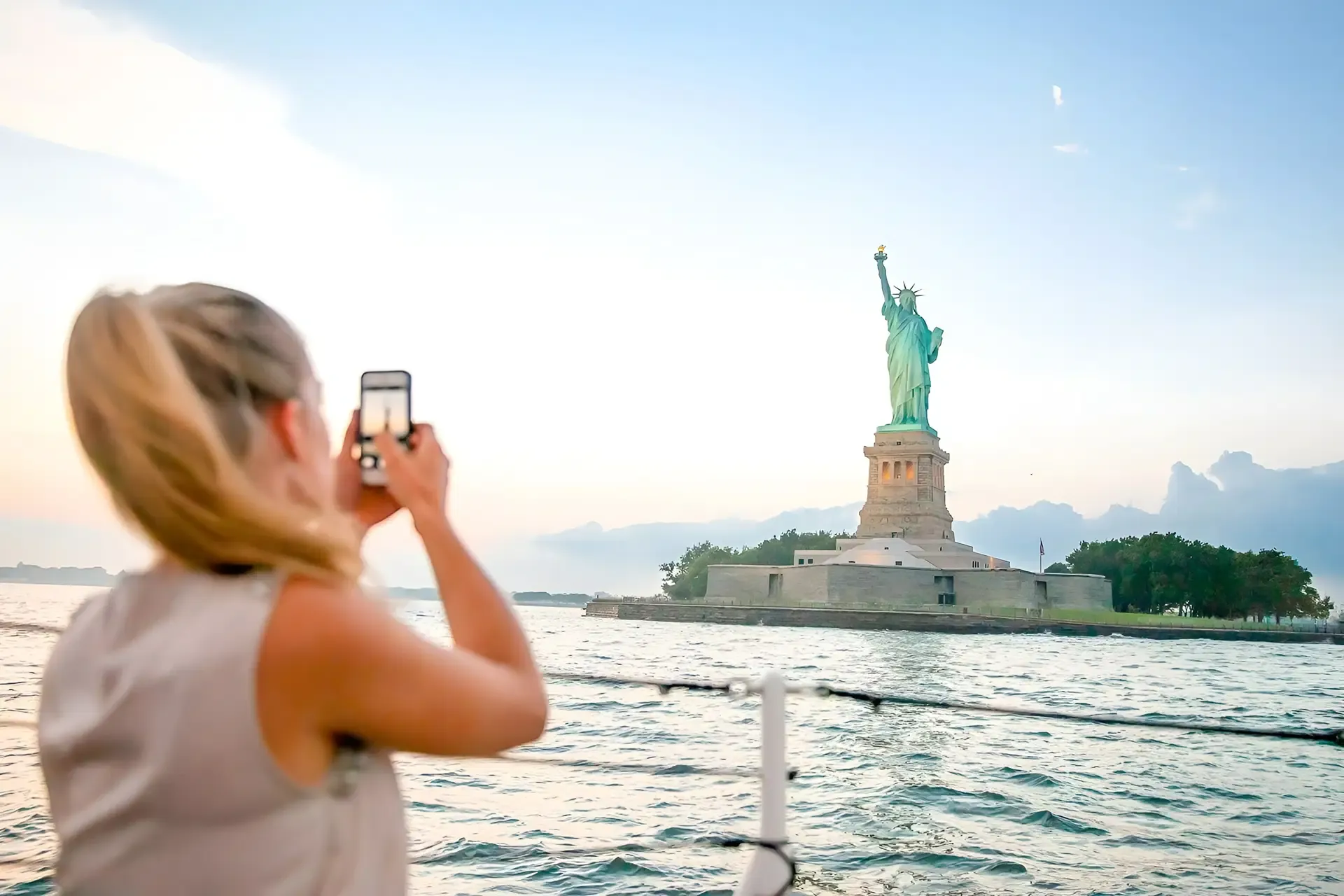
New York cruise terminals can become lively, especially during peak sightseeing windows and sunset departures. Boarding is usually orderly, but arriving early helps reduce stress and gives you time for check-in, security procedures, and finding ideal deck space. As on any busy waterfront, keep personal belongings secure and follow crew instructions during embarkation and disembarkation.
Accessibility has improved significantly across many operators, with step-free pathways, assistance protocols, and designated onboard areas on selected vessels. Still, conditions vary by tide, gangway angle, and vessel assignment, so travelers with mobility needs should confirm details in advance to ensure the chosen sailing truly matches their requirements.
Harbor rituals, events, and city life
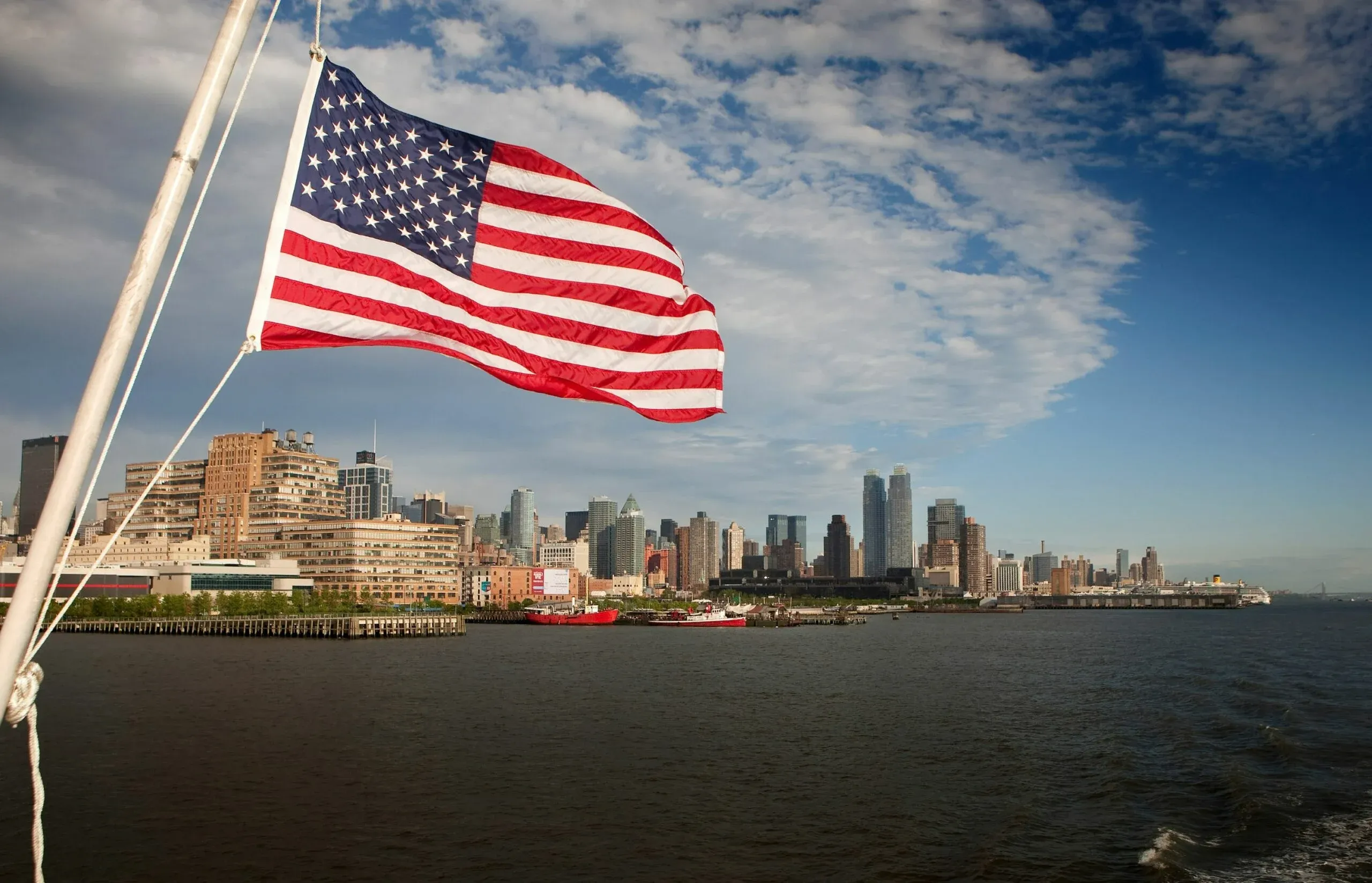
Throughout the year, New York’s waterfront hosts parades, fireworks nights, cultural festivals, and seasonal celebrations that animate the harbor in different ways. On some evenings, the skyline glows behind event lighting and river traffic creates a moving foreground of ferries, sailboats, and excursion vessels.
Even without special events, everyday harbor life has its own rhythm: commuters racing the clock, joggers tracing promenade edges, maintenance crews tending piers, and families pausing to watch boats pass at dusk. From a cruise deck, these small urban rituals become part of the experience, adding texture and humanity to the famous skyline views.
Tickets, timing, and practical planning
With many operators and route formats, choosing well starts with one question: what type of moment do you want? A quick orientation, a photo-first skyline loop, a romantic sunset sailing, or a fuller historical narration? Once you know that, compare duration, departure pier, seating style, cancellation terms, and whether commentary is live or recorded.
Smart planning also means coordinating your cruise with the rest of your day. Pair morning sailings with downtown sightseeing, or choose evening departures after museum visits and neighborhood walks. Build buffer time for transit and boarding, and you’ll avoid rushing while getting much more from the experience.
Preserving memory on an evolving waterfront
New York’s waterfront is constantly adapting to new economic realities and climate pressures, yet it also carries fragile layers of memory: immigrant arrival points, labor histories, industrial architecture, and civic spaces tied to collective identity. Preservation here is not only about restoring facades; it is also about safeguarding stories, access, and historical context.
Visitors can support this balance by choosing responsible operators, respecting public spaces, and engaging with museums or heritage institutions connected to the harbor. A sightseeing cruise becomes more meaningful when seen not just as entertainment, but as an invitation to understand how a global city remembers, rebuilds, and plans for the future.
Viewpoints, detours, and skyline moments
Many travelers use a harbor cruise as the visual anchor of their New York trip, then build side experiences around it: a walk through Battery Park, a bridge crossing into Brooklyn, a waterfront meal in DUMBO, or a ferry connection to other shoreline neighborhoods. This layering of perspectives makes the city feel both grand and navigable.
If your schedule allows, pairing one daylight cruise with one sunset or evening departure can be surprisingly rewarding. The same skyline shifts dramatically with changing light, and familiar landmarks take on entirely different moods from afternoon clarity to twilight glow and night reflections.
Why New York is best understood from the water
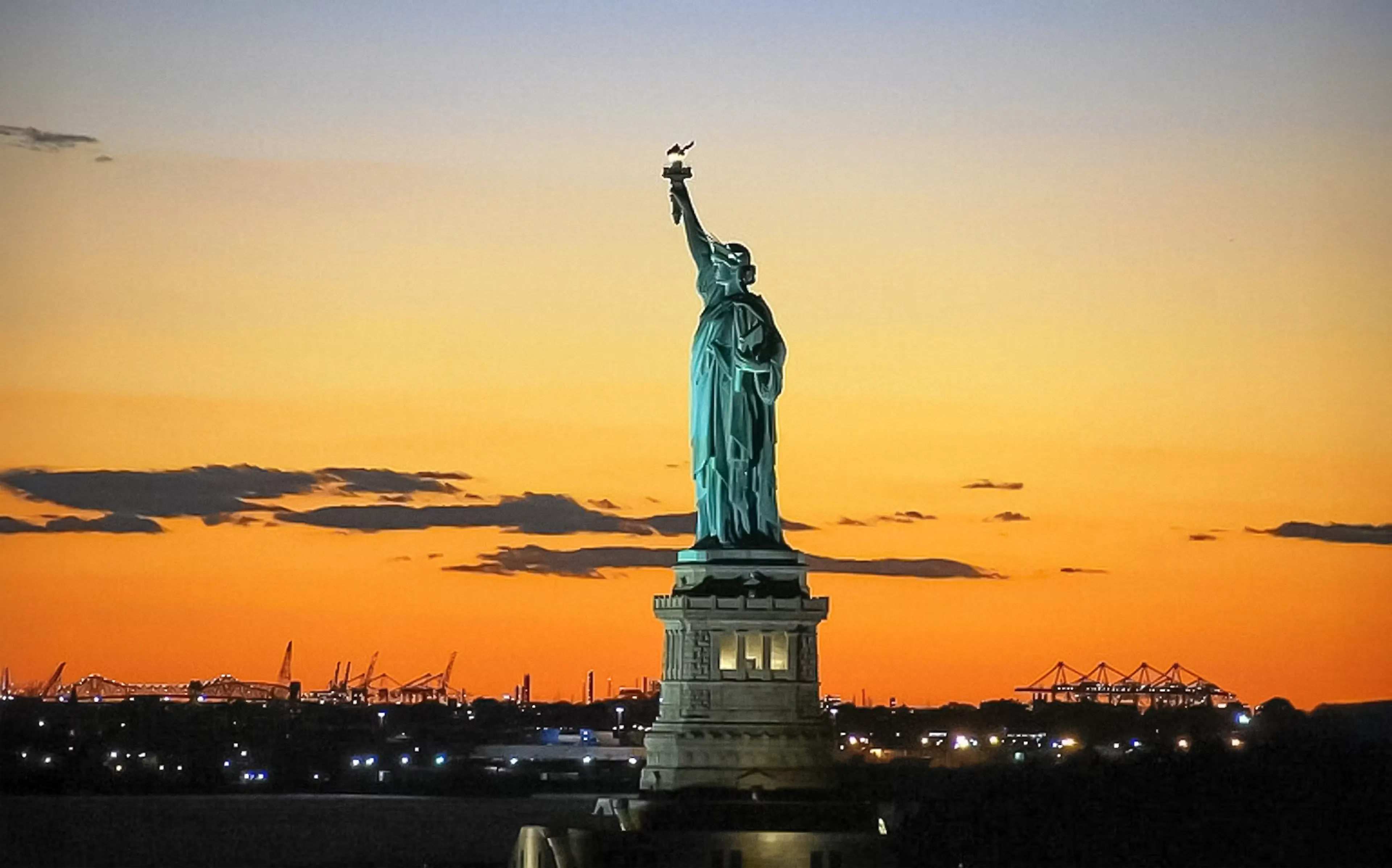
On paper, a harbor cruise might look like a simple sightseeing activity. In practice, it is one of the clearest ways to understand New York’s true structure: a city built by shorelines, stitched by bridges, powered by migration, and expressed through a skyline that keeps rewriting itself. From the deck, those relationships are visible all at once.
By the end of the sailing, your memory of New York is no longer just a list of attractions. It becomes a connected story of water, movement, people, and ambition. That is why so many travelers describe the harbor cruise as the moment the city finally feels whole—less like separate neighborhoods on a map and more like one living, breathing waterfront metropolis.
Table of Contents
From Dutch outpost to New York Harbor
Long before cruise decks filled with cameras and skyline excitement, this harbor was a strategic estuary where Lenape communities fished, traded, and navigated tidal rhythms with deep ecological knowledge. In the early 17th century, Dutch settlers established New Amsterdam at the southern tip of Manhattan, recognizing what geography made obvious: this was a natural gateway to inland rivers, Atlantic routes, and commercial opportunity. Ships arrived with goods, ideas, and ambitions, and the small colonial outpost quickly took on an outsized role in Atlantic trade.
When English control transformed New Amsterdam into New York, the harbor continued to expand as the city’s economic heartbeat. Wharves multiplied, neighborhoods thickened, and maritime labor shaped everyday life from dawn to dusk. Through wars, industrial growth, and waves of immigration, these waters remained the city’s connective tissue. Today’s sightseeing cruises glide across the same channels once crowded with merchant brigs, steam ferries, and cargo vessels, reminding every passenger that New York’s global identity was forged first at the waterfront.
Lower Manhattan and the first waterfront
Lower Manhattan is where New York’s harbor story feels most immediate. From the water, you can trace layers of time in a single sweep: old shipping edges, modern ferry terminals, civic buildings, and towers that rose as commerce shifted from docks to finance. Battery Park and nearby waterfront spaces now feel open and welcoming, but for centuries this shoreline was a dense working zone where maritime schedules dictated the pace of urban life.
As your boat passes this edge of the island, it becomes easier to understand how deeply the city’s street plan and economy were shaped by port logistics. What looks serene from a sightseeing deck once roared with carts, cargo cranes, and multilingual dockside negotiations. Even now, the area carries a quiet sense of continuity: ferries come and go, commuters flow through terminals, and the harbor remains a living infrastructure rather than a static backdrop.
Immigration, Ellis Island, and new beginnings
For millions of families, New York Harbor was not a postcard scene but a threshold. Between the late 19th and early 20th centuries, immigrant ships approached these waters carrying people who had crossed oceans with uncertain futures and extraordinary resolve. Ellis Island became the symbolic and administrative gateway for many of these arrivals, where medical checks, paperwork, waiting halls, and anxious hope shaped life-changing first days in America.
Cruising near Ellis Island today can be emotional, especially for visitors tracing family history. The skyline in the distance stands as a visual promise that once drew newcomers forward, while the island itself preserves the memory of courage, separation, reinvention, and resilience. From the deck, you are not just seeing architecture; you are witnessing one of the defining migration landscapes of the modern world.
Bridges that stitched the city together
The great bridges of New York are engineering monuments, but they are also social connectors that transformed everyday life. When the Brooklyn Bridge opened in 1883, it dramatically reduced travel barriers between boroughs and accelerated patterns of work, housing, and commerce. Later bridges expanded those connections, integrating wider parts of the metropolitan region into a denser urban web.
From the water, bridge design details become easier to appreciate: stone towers, suspension geometry, traffic flow, and the sheer scale of infrastructure built to bind a growing city together. As your cruise passes beneath or alongside these structures, you glimpse the practical brilliance behind New York’s expansion and the visual poetry that made its bridges global icons.
Industry, shipping lanes, and working piers
Beyond landmark views, New York Harbor has always been a labor landscape. Tugboats, barges, ferries, cargo terminals, and service vessels have long kept the metropolitan system moving. Even as container shipping shifted to larger regional facilities over time, maritime logistics, pilot navigation, and waterfront operations remained central to the region’s economic function.
On a sightseeing route, you may notice this working character in subtle ways: coordinated vessel movements, restricted channels, and port security patterns that shape navigation. These details remind visitors that the harbor is not only a scenic stage set; it is an active and highly managed environment where tourism coexists with transport, trade, maintenance, and emergency services.
Skyscrapers, finance, and the changing skyline
Few skylines have changed as visibly and as often as New York’s. From early steel-frame towers to Art Deco silhouettes and contemporary glass forms, the city’s vertical growth mirrored technological progress and economic ambition. The financial district in particular became a symbol of global markets, where architecture projected both confidence and competition.
Seen from the harbor, the skyline reads almost like a living timeline: historic profiles alongside bold new structures, each era leaving its own geometry. This perspective explains why so many visitors describe their cruise as the moment New York finally “clicks”—because from the water, the city’s scale, contrasts, and continuity become instantly legible.
Waterfront renewal in Manhattan and Brooklyn
In recent decades, large stretches of New York’s shoreline have been reimagined from industrial infrastructure into public parks, promenades, cultural venues, and mixed-use neighborhoods. Areas once dominated by heavy port functions now host cyclists, families, performance spaces, and skyline-facing lawns, all while retaining visual traces of maritime history.
A harbor cruise reveals this transformation in continuous sequence: preserved piers beside new developments, old warehouse districts near contemporary residential blocks, and community waterfronts that reconnect residents to the water. It is one of the clearest examples of how cities evolve—adapting land use while negotiating memory, access, resilience, and identity.
Crowds, safety, and cruise accessibility
New York cruise terminals can become lively, especially during peak sightseeing windows and sunset departures. Boarding is usually orderly, but arriving early helps reduce stress and gives you time for check-in, security procedures, and finding ideal deck space. As on any busy waterfront, keep personal belongings secure and follow crew instructions during embarkation and disembarkation.
Accessibility has improved significantly across many operators, with step-free pathways, assistance protocols, and designated onboard areas on selected vessels. Still, conditions vary by tide, gangway angle, and vessel assignment, so travelers with mobility needs should confirm details in advance to ensure the chosen sailing truly matches their requirements.
Harbor rituals, events, and city life
Throughout the year, New York’s waterfront hosts parades, fireworks nights, cultural festivals, and seasonal celebrations that animate the harbor in different ways. On some evenings, the skyline glows behind event lighting and river traffic creates a moving foreground of ferries, sailboats, and excursion vessels.
Even without special events, everyday harbor life has its own rhythm: commuters racing the clock, joggers tracing promenade edges, maintenance crews tending piers, and families pausing to watch boats pass at dusk. From a cruise deck, these small urban rituals become part of the experience, adding texture and humanity to the famous skyline views.
Tickets, timing, and practical planning
With many operators and route formats, choosing well starts with one question: what type of moment do you want? A quick orientation, a photo-first skyline loop, a romantic sunset sailing, or a fuller historical narration? Once you know that, compare duration, departure pier, seating style, cancellation terms, and whether commentary is live or recorded.
Smart planning also means coordinating your cruise with the rest of your day. Pair morning sailings with downtown sightseeing, or choose evening departures after museum visits and neighborhood walks. Build buffer time for transit and boarding, and you’ll avoid rushing while getting much more from the experience.
Preserving memory on an evolving waterfront
New York’s waterfront is constantly adapting to new economic realities and climate pressures, yet it also carries fragile layers of memory: immigrant arrival points, labor histories, industrial architecture, and civic spaces tied to collective identity. Preservation here is not only about restoring facades; it is also about safeguarding stories, access, and historical context.
Visitors can support this balance by choosing responsible operators, respecting public spaces, and engaging with museums or heritage institutions connected to the harbor. A sightseeing cruise becomes more meaningful when seen not just as entertainment, but as an invitation to understand how a global city remembers, rebuilds, and plans for the future.
Viewpoints, detours, and skyline moments
Many travelers use a harbor cruise as the visual anchor of their New York trip, then build side experiences around it: a walk through Battery Park, a bridge crossing into Brooklyn, a waterfront meal in DUMBO, or a ferry connection to other shoreline neighborhoods. This layering of perspectives makes the city feel both grand and navigable.
If your schedule allows, pairing one daylight cruise with one sunset or evening departure can be surprisingly rewarding. The same skyline shifts dramatically with changing light, and familiar landmarks take on entirely different moods from afternoon clarity to twilight glow and night reflections.
Why New York is best understood from the water
On paper, a harbor cruise might look like a simple sightseeing activity. In practice, it is one of the clearest ways to understand New York’s true structure: a city built by shorelines, stitched by bridges, powered by migration, and expressed through a skyline that keeps rewriting itself. From the deck, those relationships are visible all at once.
By the end of the sailing, your memory of New York is no longer just a list of attractions. It becomes a connected story of water, movement, people, and ambition. That is why so many travelers describe the harbor cruise as the moment the city finally feels whole—less like separate neighborhoods on a map and more like one living, breathing waterfront metropolis.